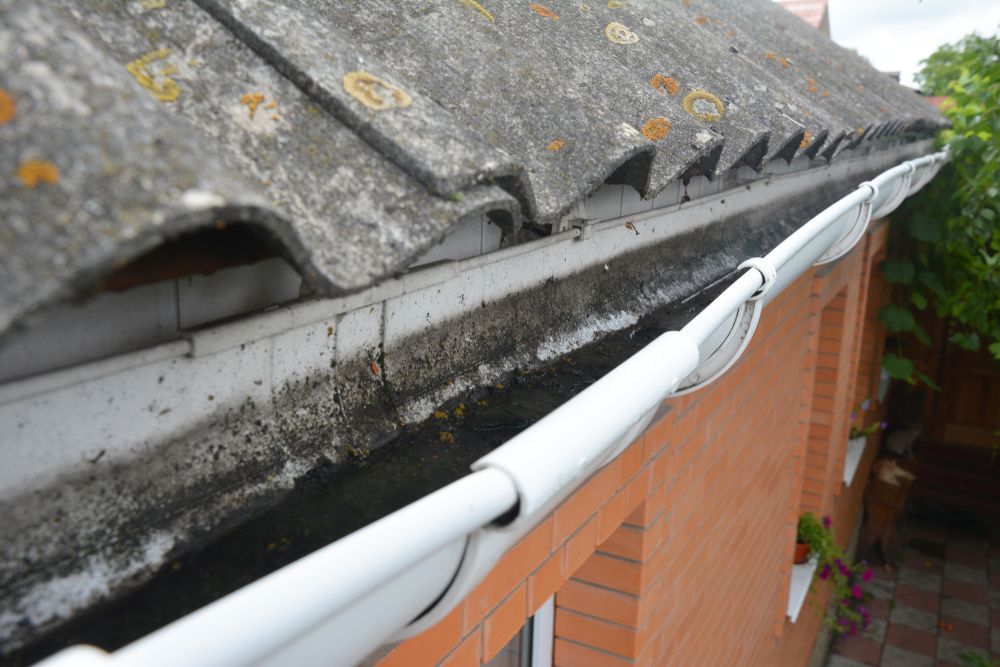
What Geelong's Storm Season Actually Does to Box Gutters (And How to Stop It)
Every year it's the same pattern. The first proper storm rolls through Geelong, the rain comes down hard and fast and the calls start coming in, ceiling stains, water running down a wall, a drip that "just started out of nowhere." More often than not, the culprit is the same part of the roof: the box gutter.
Box gutters don't fail because they are poorly made. They fail because of how they are built and where they sit and Geelong's storm pattern, short, intense downpours after long dry stretches, is almost custom designed to expose their weak points.
Here's what's actually happening up there and what stops it becoming your problem.
What Makes a Box Gutter Different (And More Vulnerable)
A standard gutter hangs off the edge of a roof and relies on gravity and a bit of slope to keep water moving. A box gutter is different, it's built into the roof itself, usually between two roof planes, a parapet and a roofline, or behind a false front. It's essentially a shallow, internal channel doing the same job as a normal gutter, but hidden from view and far less forgiving if something goes wrong.
That design creates three problems normal gutters don't really have:
- Less fall. Box gutters are often close to flat, relying on a very slight grade to move water to the outlet. Any sagging, debris, or incorrect original installation and that fall disappears.
- No visibility. You can't glance up from the ground and tell a box gutter is filling with leaves. Problems build invisibly until they overflow.
- Nowhere for excess water to go. A normal gutter overflowing off the front edge is annoying but rarely damaging. A box gutter overflowing means water pushing back under roof sheeting and into the building itself.
Why Storm Season Hits Box Gutters Hardest
Geelong's storms tend to follow a pattern: long dry spells, then sudden, heavy rain events. That combination is almost the worst case scenario for a box gutter.
Debris builds up during dry weather
Leaves, seed pods and dust settle into the channel over weeks or months with no rain to flush them out. By the time a storm hits, there can be a genuine blockage sitting right at the outlet.
Sudden volume overwhelms a marginal system
A box gutter that's coping fine with light, steady rain can be completely overwhelmed the moment an intense burst arrives, Geelong storms often dump a lot of water in a short window, well beyond what a partially blocked or slightly undersized gutter can shift.
Wind drives water sideways
Storms here rarely come with rain alone, wind driven rain can push water up and under flashing joints at the top of a box gutter, finding gaps that would never be a problem in calm conditions.
Temperature swings stress the joints
Sheet metal expands and contracts with heat and box gutter joints and welded seams are a common point where that movement eventually causes a crack or split, often only revealing itself once water pressure from a storm forces its way through.
Put those together and you get the classic pattern: a home that's been fine for years suddenly has a leak the week after the first big storm of the season.
The Warning Signs Before It Becomes a Real Problem
Box gutter failure rarely comes out of nowhere, there are usually signs beforehand, they are just easy to miss because the gutter itself is out of sight.
- A faint water stain or discolouration on a ceiling, especially near an internal wall or where two roof sections meet
- A musty smell in a roof cavity or top floor room after rain
- Visible sagging or ponding when viewed from a ladder or drone
- Peeling paint or bubbling on an internal ceiling or wall
- Rust streaking visible at a box gutter outlet or downpipe junction
Any one of these on its own is worth a look. More than one and it's worth acting before the next storm, not after.
What Actually Stops the Damage
- Clear debris before storm season starts. The single most effective thing a homeowner can do is have bo cleaned out heading into the wetter months, before the backlog of dry season leaf litter meets the first heavy rain.
- Check the fall and outlets. A box gutter needs a proper, consistent fall to the outlet. If it's ponding anywhere along its length, that's usually either a sign of sagging structure or debris sitting in a low point, both worth fixing before storm season, not during it.
- Insejoints and welds. Because box gutters are custom fabricated on site, the joints are only as good as the original workmanship. An annual check for hairline cracks or lifting seams catches problems while they are still a patch job, not a full replacement.
- Upgrade undersized systems. Some older Geelong homes have box gutters that were adequately sized decades ago but are now under capacity for the way storms behave today, or for the additional roof area from an extension. If a box gutter overflows in every significant storm, resizing it, not just clearing it, may be the real fix.
- Get a professional inspection, not a guess from the ground. Because you can't see into a box gutter from the yard, the only reliable way to know its condition is to have someone actually get up there and check it, ideally before the season that's going to test it.
When to Call a Roof Plumber
If you have had a leak appear during or straight after a storm, or you are noticing any of the warning signs above, it's worth getting it looked at properly rather than waiting to see if it happens again. Box gutter problems tend to get more expensive the longer they sit, what starts as a $300–$500 clean and reseal can turn into a full box gutter replacement, plus ceiling and framing repair, if water's been getting in unnoticed for a while.
How Hinch Plumbing Handles Box Gutters
We see the same storm season pattern across Geelong, the Surf Coast and the Bellarine Peninsula every year, box gutters that were fine in dry weather suddenly letting go the first time a real storm rolls through. Our roof plumbers check fall, outlets, joints and debris buildup as standard, so problems get caught and fixed while they are still simple, not after they have made their way into your ceiling.
Want your box gutters checked before the next storm hits? Call Hinch Plumbing on 0460 321 351 for an obligation free inspection.
FAQs
How often should box gutters be cleaned?
As a general rule, at least once a year, ideally just before storm season. Homes with overhanging trees may need it twice a year, since leaf litter is the most common cause of blockage driven overflow.
Why is my box gutter leaking even though it looks fine from the ground?
Because box gutters sit within the roofline, most problems, sagging, debris, joint cracks, aren't visible unless someone gets up and inspects the channel directly. A leak is often the first sign of a problem that's been building for a while.
Is it normal for a box gutter to overflow in heavy rain?
No. A well maintained, correctly sized box gutter shouldn't overflow even in a heavy storm. Regular overflowing is a sign of either a blockage, insufficient fall, or a system that's now undersized for the roof it's servicing.
How much does box gutter repair cost?
It depends on the extent of the problem. A straightforward clean and reseal is generally a modest job, but replacement, or repairing water damage from a leak that went unnoticed, costs significantly more. Catching problems early is by far the cheaper path.